Basement waterproofing cost in Huntsville: the per-foot math
Waterproofing is sold by the foot, which is honest but hard to picture until someone walks it out on your own basement. This guide does the arithmetic for a typical Huntsville basement and explains when the cheaper method is the right one and when it is not.
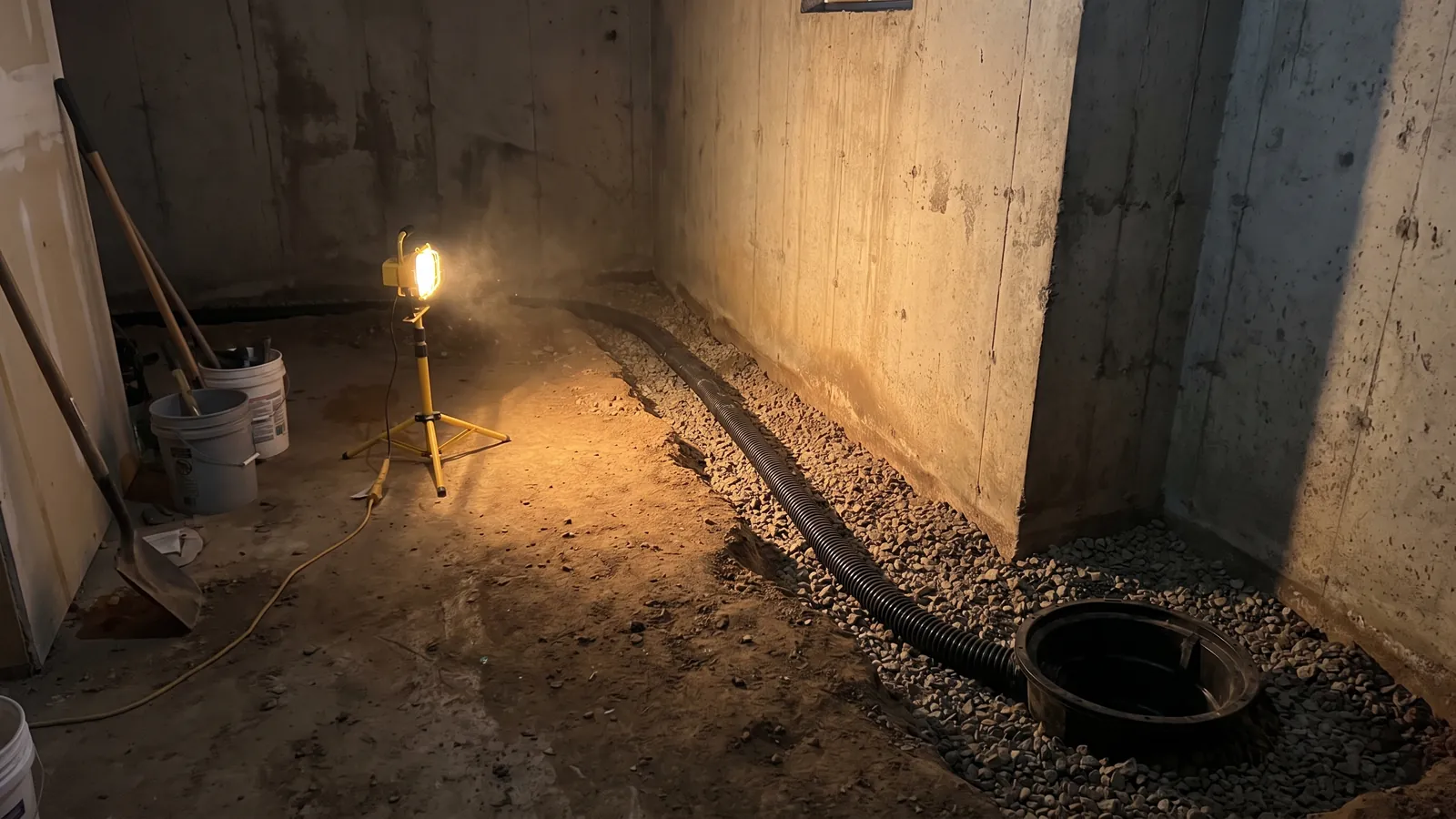
Two methods, two price bands. Interior drain tile intercepts water after it has reached the wall and carries it to a sump, and it costs $65 to $110 per linear foot in 2026. Exterior waterproofing digs down the outside of the wall, applies a membrane and lays a drain at the footing, and costs $110 to $190 per foot. The sump pump that both methods usually need is $1,200 to $2,600 installed, with $600 to $1,100 more for a battery backup.
Worked out for a real basement
Take a 1970s south Huntsville ranch with a 30 by 40 foot basement, water showing along the uphill wall and one adjoining corner. That is about 55 feet of wall that needs treating, not the full 140-foot perimeter.
| Option | Footage | 2026 range |
|---|---|---|
| Interior drain tile on the wet wall and corner | 55 ft | $3,600 – $6,000 |
| Add a sump pump with battery backup | 1 | $1,800 – $3,700 |
| Interior total | $5,400 – $9,700 | |
| Exterior membrane and footing drain on the same run | 55 ft | $6,000 – $10,500 |
| Full-perimeter interior system | 140 ft | $9,100 – $15,400 |
| Full-perimeter exterior system | 140 ft | $15,400 – $26,600 |
Most Huntsville basements only need the uphill side treated, because the perched water table along the eastern ridges arrives from one direction. A technician who prices the full perimeter without explaining why should be asked why.
What is inside the per-foot price
Interior drain tile
Cutting a trench through the slab along the wall, roughly a foot wide; laying perforated pipe in washed gravel; a dimpled membrane up the wall so water behind the block drops into the trench; re-pouring the concrete; and the run to the sump basin. Finished basements cost more because the finish along that wall comes off and goes back.
Exterior waterproofing
Excavating to the footing, which in Huntsville is often seven or eight feet down; cleaning the wall; a membrane or coating; a drainage board; a footing drain to daylight or to a sump; and backfilling with gravel rather than the clay that caused the problem. Decks, patios, AC units and gas lines along that wall each add a line to the sheet.
The sump
A basin set below the slab, a primary pump, a check valve and a discharge line that leaves the house and keeps going. The battery backup matters more here than in most places: spring storms that bring the water are the same storms that take the power out.
What makes a job cheaper
- Water that only shows on one wall, so only that wall is treated.
- An unfinished basement with a clean floor.
- Grading and downspouts that can be fixed first, which sometimes shrinks the waterproofing to nothing.
- A discharge point close by, downhill, that does not need a long buried line.
What makes it dearer
- A finished basement with drywall, flooring and built-ins along the wet wall.
- Exterior work under a deck, a screened porch or a driveway.
- A wall that is also bowing, since straps or anchors go in before the drain tile.
- Iron ochre, the orange sludge common in Madison County groundwater, which calls for a cleanout-friendly pipe layout.
- A lot with nowhere to send the water, so a dry well or a long discharge run is needed.
The thing to do before paying for any of it
Walk outside in the next hard rain and watch where the water goes. If a downspout drops at the wet corner and the ground slopes toward the house, $200 of downspout extension and a yard of fill may do most of the job. The free inspection includes this walk, and the findings will say when the fix is a shovel rather than a saw.
What people ask about this
Which is better, interior or exterior?
Exterior stops water before it touches the wall and is the better method on paper. Interior is cheaper, less disruptive to the yard and handles a perched water table that comes from below as well as beside. In Huntsville the interior system wins most of the time on a block wall; exterior earns its price on a poured wall that is also cracked or on a new build.
Do I need a sump pump with interior drain tile?
Nearly always. The trench collects water; something has to move it out of the house, and in a basement that means a pump. The exception is a walk-out basement where the drain can run to daylight downhill.
How long does the job take?
An interior run of 50 to 60 feet is usually two days, including the concrete cure before the floor is walked on. Exterior work on the same length is three to five days depending on the dig and the weather.
Will it fix the musty smell?
It will stop the water, and that stops most of the smell. A basement that has been damp for years may also want a dehumidifier and, if there is visible growth, a remediation company, which is a separate trade we will name but not do.
Is waterproofing covered by my policy?
Groundwater seepage is excluded on most Alabama homeowner policies. A sudden pipe burst that floods the basement is a different claim. See the page on paying for repairs for the distinction.
Keep reading: How waterproofing works here · Sump pump installation · The full 2026 price list