An inspection that hands you numbers you can keep, whether or not anything needs fixing
Most inspections end with the advice to watch something. That is a good outcome, and it is why the inspection is free: it costs nothing to find out the crack by the back door stopped moving in 2015. When something does need fixing, the same visit gives you measurements, photographs and a priced sheet you can set beside anyone else's.
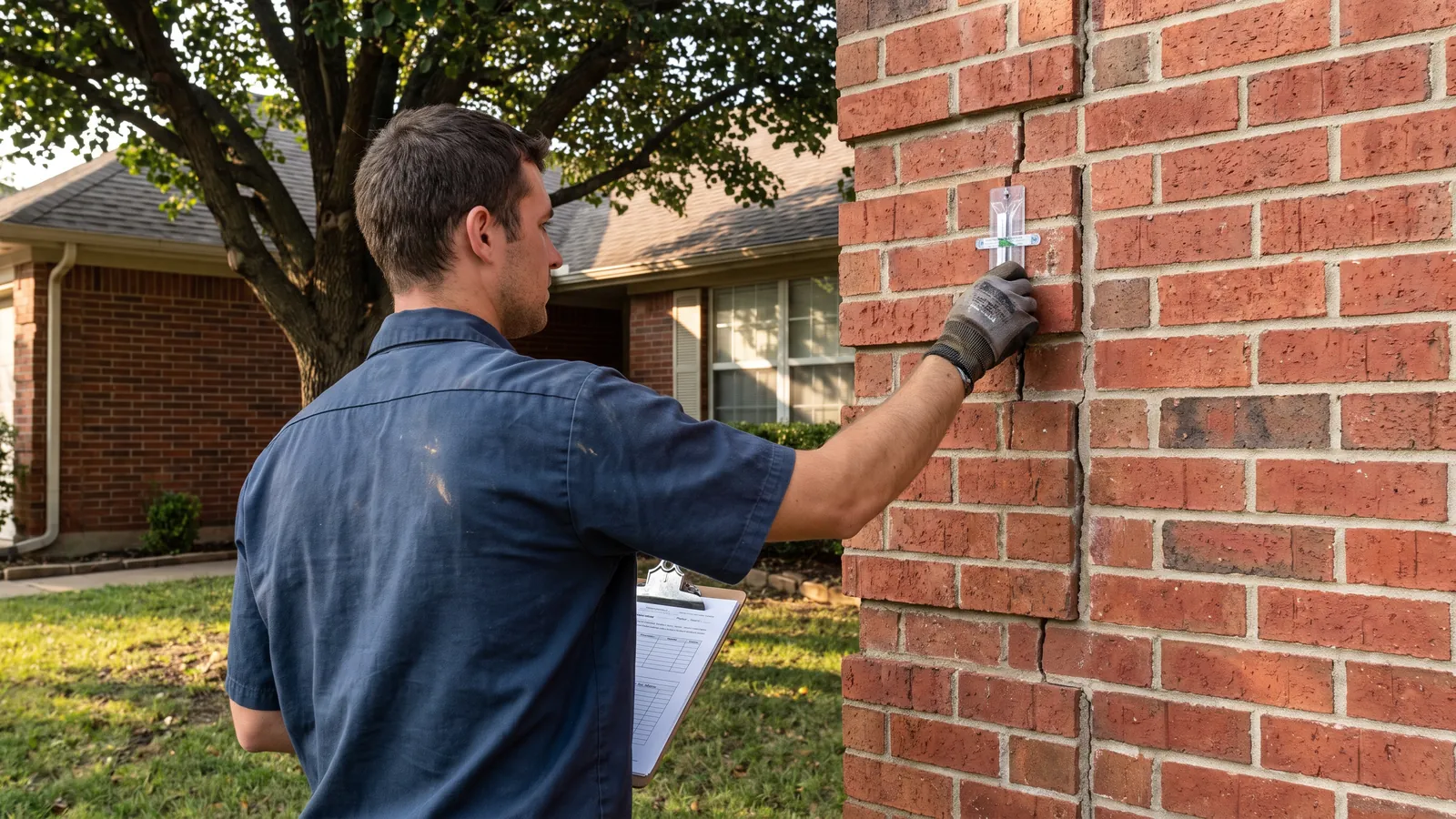
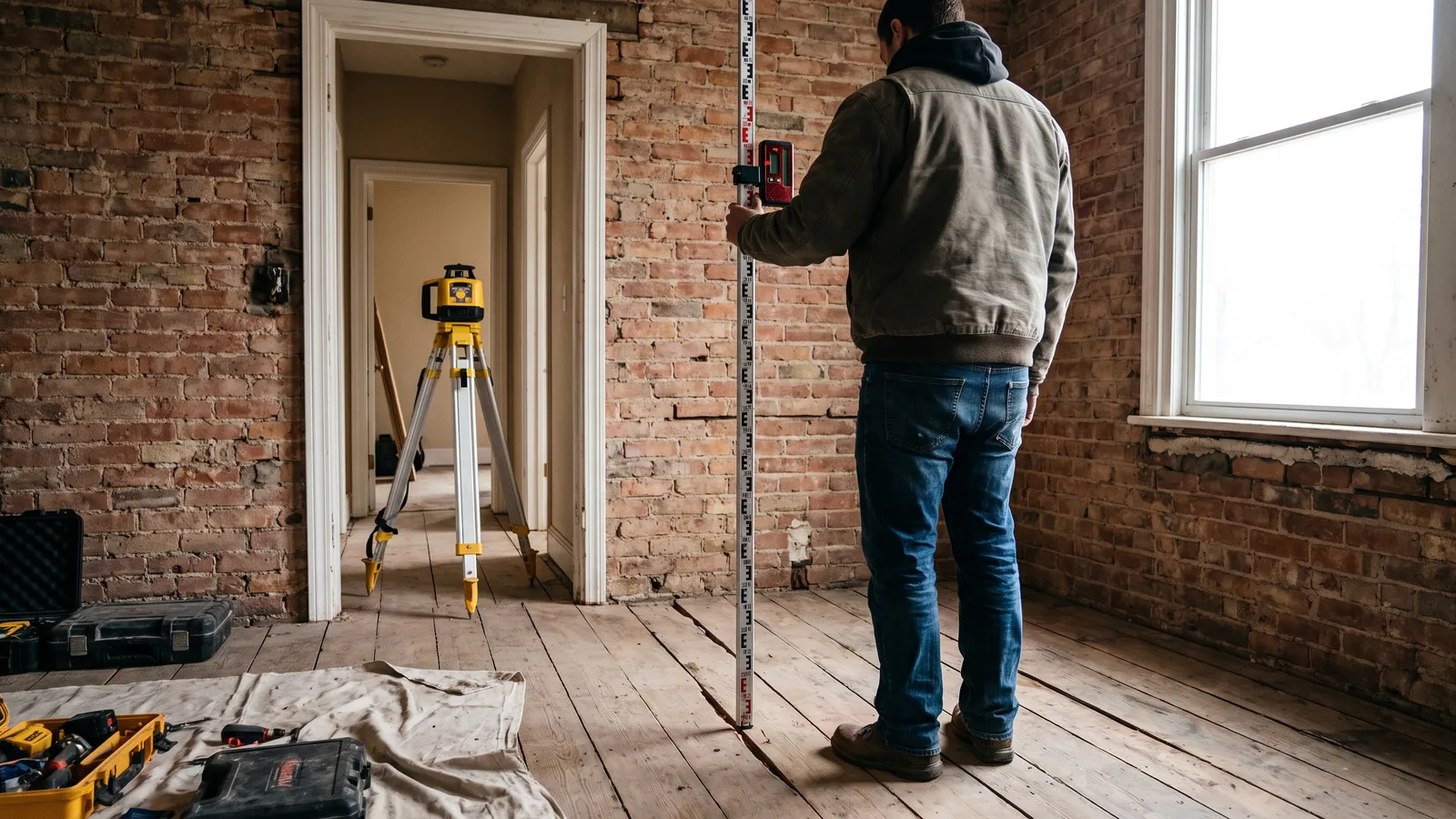
An inspection here runs about ninety minutes and follows the same path every time, so that two inspections a year apart can be compared. It starts outside, walking the footing line: gaps between slab and soil, stair-step cracks in brick with the joint widths gauged at top and bottom, a plumb line against the chimney, the ground sloped toward or away from the house at each downspout, trees inside fifteen feet of the wall. It goes inside with a rotating laser and a receiver, reading floor elevation at thirty or forty points and drawing them on a plan. It checks every exterior door for rub and latch, sights along the ceiling lines, and measures any interior crack with a gauge. In a basement it adds a straightedge against each wall, moisture readings at the floor-wall joint and a look at where the water stains stop. In a crawl space it adds the piers, the girders, the joists under the bathrooms and the condition of the dirt.
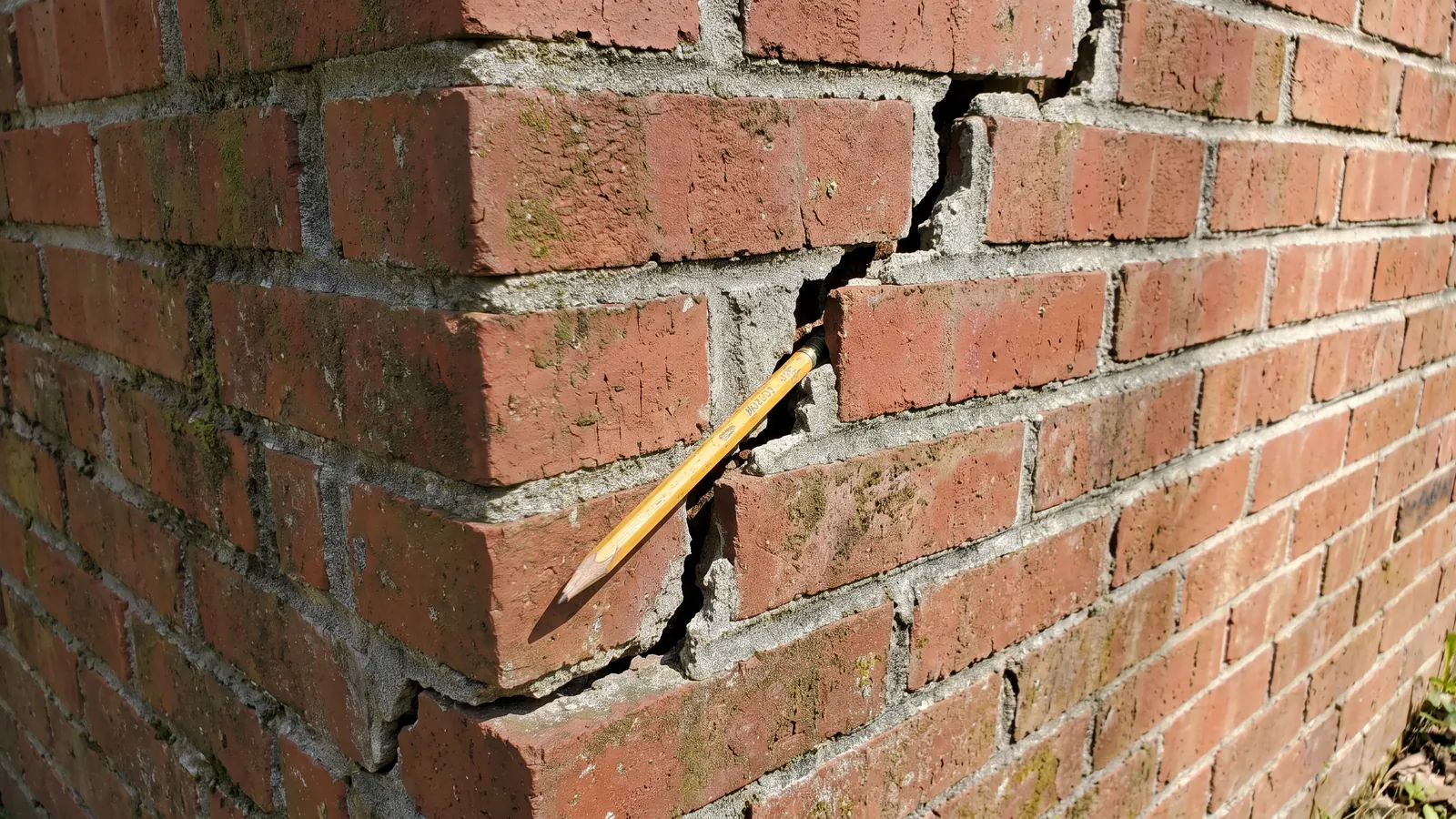
What you get is written, with the photographs. It names what is cosmetic, what has stopped and what is still moving, and it gives the reasoning: a corner reading an inch and a quarter low with a downspout splashing beside it and a crack that is wider at the top is a dropped footing with a water cause; a hairline vertical crack in a poured wall with the floors reading flat is curing shrinkage from the year the house was built. Where a repair is warranted the sheet prices it, item by item, and the sheet holds for thirty days. Where it is not, the report says watch, and how: a dated photograph, pencil marks at the ends of the crack, a call if either changes.
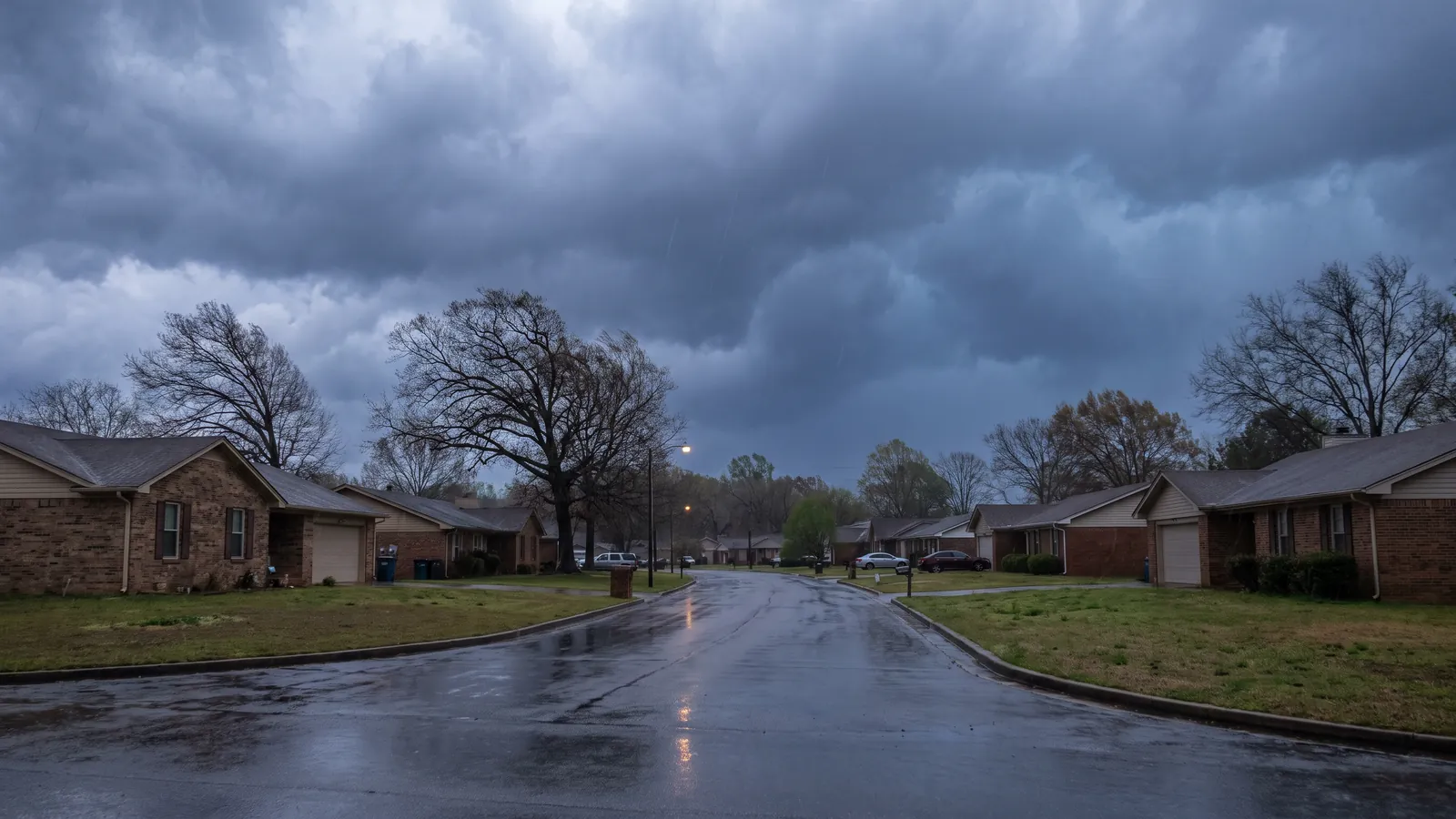
Two kinds of inspection come up on their own schedule. A pre-purchase inspection is for the week you are under contract on a house in Madison, in the older streets off Governors Drive, or out in Hampton Cove: the general home inspector flags the foundation and the lender wants an answer. The foundation report with elevations and gauged cracks is that answer, and it is yours to hand to the seller. A post-storm inspection is for the weeks after a severe weather event; the county has had three in living memory that moved soil and structures, April 27 2011, April 28 2014 and March 25 2021, and a house that took wind load or flooding can shift in ways that do not show until the ground dries.
What the inspection is not is a structural engineer's report. The technician measures and recommends; an engineer with a stamp certifies. If your lender, your insurer or a buyer's attorney needs a sealed letter, we will say so on the day and refer you to a licensed engineer, and the elevation survey and photographs go with you to that appointment. Likewise, the inspection does not pretend that every crack needs a pier; most of what we see in a year gets a note and a date, not an invoice.
What this work includes
Outside, inside, under
Footing line, brick, chimney and drainage outside; laser floor elevations, doors and cracks inside; walls and moisture in a basement; piers, girders and joists in a crawl space.
Numbers on a plan
Thirty to forty elevation readings drawn on a sketch of your house, crack widths gauged at both ends, moisture readings logged, all photographed and dated.
Cosmetic called cosmetic
The report sorts findings into watch, fix later and fix now, with the reasoning written out, and most houses get more of the first than the last.
Pre-purchase, in contract time
Scheduled inside the inspection window with the report written for a buyer, a seller and a lender to read.
Post-storm, when the ground has dried
After a tornado, straight-line wind or flooding, a check for movement that did not show while the soil was saturated.
Engineer referred, not pretended
Where a stamped letter is needed, the inspection says so and the measurements go to a licensed structural engineer you hire; we do not issue certifications.
Foundation inspection prices in Huntsville, AL
| Item | 2026 range | What changes it |
|---|---|---|
| Standard foundation inspection with report | $0 | Free, roughly 90 minutes, no obligation |
| Pre-purchase inspection, written for a lender | $0 | Free; same report, scheduled inside your contract window |
| Post-storm inspection | $0 | Free; best two to three weeks after the event |
| Second visit to re-read monitored cracks | $0 | Free; same gauge points as the first |
| Crack monitoring gauges left in place | $25 – $60 | Each, optional, read by you or by us |
| Structural engineer's sealed letter | Referred | Hired by you; typical local fees $400 – $900 |
| Sewer camera check for a slab leak | $200 – $400 | When settlement follows a plumbing line |
| Repair sheet from the findings | Included | Itemized, holds for 30 days |
These are 2026 Huntsville-area ranges meant for budgeting, not quotes. The technician measures first and prices the job on site, each item on its own line; nothing is dug, injected or lifted until you have agreed to the sheet, and the sheet holds for 30 days.
From recent jobs
Questions about foundation inspection
Is the inspection really free?
Yes, including the written report with elevations and photographs, and including the pre-purchase and post-storm versions. The report is yours whether or not you ever call again. The technician is paid when a repair is done, and most inspections do not lead to one.
How soon can you come for a house under contract?
Usually within two or three working days, and we will work around the inspection period in your contract. Tell us the deadline when you call so the report is in your hands before the window closes.
Will you give me a letter for my lender?
We give you a written report with measurements and findings, which satisfies most buyers and many lenders. If a lender or insurer requires a stamped engineer's letter, we say so and refer a licensed structural engineer; we do not sign as engineers.
Should I get the house checked after a storm?
If the house took wind, if water stood against it, or if new cracks or sticking doors showed up in the weeks after, yes. Wait two or three weeks for the soil to settle; an inspection on saturated ground reads differently than one on dry.
What should I do before you arrive?
Nothing special. Clear a path to the crawl space hatch or the basement stairs, know roughly when the house was built and when you first noticed anything, and have any old reports or photographs handy. Pets inside, please.
What if you find nothing wrong?
Then the report says so, with the readings that prove it, and you keep it as a baseline. A clean elevation survey from this year is the most useful thing a future buyer's inspector can be handed.