Basement waterproofing in Huntsville: what actually works on this ground
Huntsville basements are a minority of the housing stock and most of them sit on the east side, under Monte Sano and the ridges, which is precisely where the ground holds water. The methods are the same ones used everywhere; what differs is knowing which one the hill needs. This is a guide to that.
Why the east side stays wet
Along the foot of Monte Sano and the ridges that run north and south of it, rain soaks into the hillside, hits a layer it cannot pass, and moves sideways over that layer. That is a perched water table: water sitting above the real groundwater, and moving toward the valley after every long rain. A basement dug into that slope has its uphill wall standing in a slow river for a week after an April storm. The downhill wall is often bone dry. That pattern, one wet wall and three dry ones, is the Huntsville signature, and it tells you which method to use and how much of the perimeter to treat.
First, the free fixes
Half the wet-basement calls in Madison County are not a waterproofing problem but a plumbing-of-the-roof problem. Before a saw touches the slab:
- Downspouts should discharge at least six feet from the foundation, further on the uphill side, into a splash block or a buried line to daylight.
- The ground should fall away from the house, roughly six inches over the first ten feet. On a hillside lot that often means a swale on the uphill side to carry water around the house.
- Gutters should be clean and sized for the roof; an overflowing gutter is a downspout that empties at the wall.
- Window wells should have covers and a drain.
- Mulch beds against the house should not sit above the top of the foundation.
The inspection includes a walk around the house for exactly these, ideally in rain, and the findings will say when a weekend with a shovel is the whole repair.
Interior drain tile
A trench is cut through the slab along the inside of the wet wall, perforated pipe is laid in washed gravel below the footing level, a dimpled membrane runs up the wall so water in the block drops into the trench, the concrete is re-poured, and the pipe runs to a sump pump. It works on the principle of catching water after it arrives and giving it somewhere lower to go. It does not keep the wall dry on the outside, but it keeps the floor dry inside, which is what most owners are paying for.
Fits: block walls, which weep through the mortar joints no matter what is done outside; houses where the uphill wall is under a deck, a driveway or a neighbor's fence; perched water that comes up from below the slab as well as through the wall; finished yards. Cost $65 to $110 per foot.
Exterior waterproofing
The outside of the wall is excavated to the footing, cleaned, coated with a membrane, covered with a drainage board, and a footing drain is laid in gravel running to daylight or a sump. The clay backfill that was holding water against the wall is replaced with gravel. The wall stays dry because water never reaches it.
Fits: poured walls that are cracked and leaking at the cracks; new construction; walls that are also bowing and are being exposed anyway for anchors; lots where the wet wall is reachable with an excavator and nothing valuable is in the way. Cost $110 to $190 per foot.
Which one, for which house
| Situation | Usual answer | Why |
|---|---|---|
| Block wall, one wet wall, open lot | Interior | Block weeps; interior catches it; cheaper |
| Poured wall, leaking through two cracks | Injection first, then interior if it continues | Cracks may be the whole problem |
| Wet wall under a deck or driveway | Interior | Exterior dig would cost more than the deck |
| Wall bowing more than an inch and wet | Exterior, with anchors | Wall is being excavated anyway |
| Water coming up through the floor, not the wall | Interior with a sump | Perched water from below; only an interior system drains it |
| Finished basement, one damp corner | Grading and downspouts first; interior on that corner if needed | Least disruption to the finish |
The sump is not optional
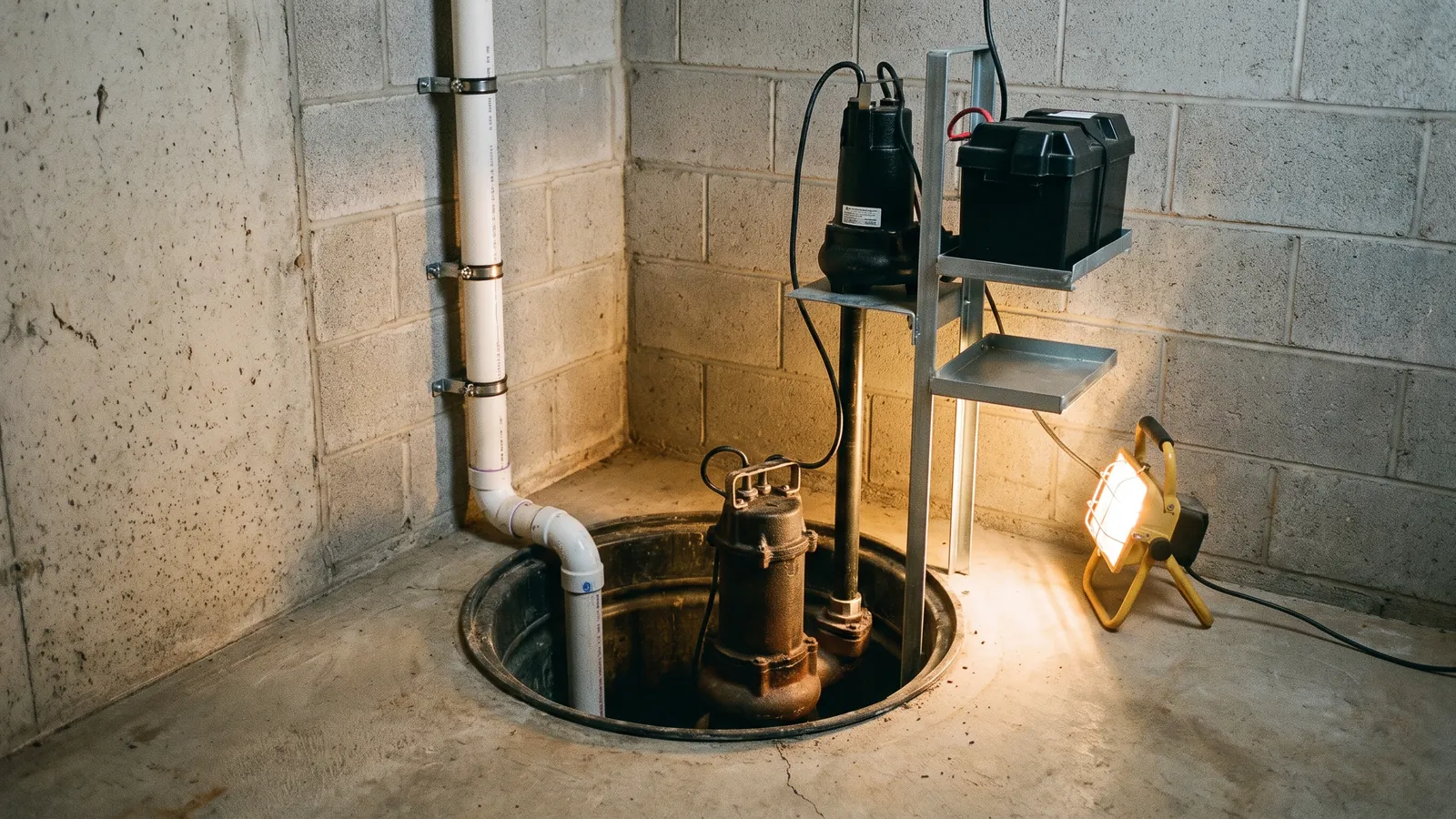
Any interior system, and most exterior ones on a flat lot, end at a sump: a basin below the slab with a pump that lifts the water out and sends it away from the house. In Huntsville the spring storms that bring the water also bring the power outages, so the battery backup pump, $600 to $1,100 more, is the difference between a dry basement and a wet one during the one week a year it matters. Iron ochre, the orange bacterial sludge in a lot of Madison County groundwater, clogs pumps and pipes; a system here is laid out with cleanouts and the pump checked yearly.
What waterproofing does not do
It does not stop a wall from bowing; that is straps or anchors, done first. It does not stop humidity; a dehumidifier does that. It does not treat mold that grew while the basement was wet; a remediation company does that, and the findings will say so when it is needed. And it does not fix a basement where the water is coming from a leaking supply line, which is a plumber's job and comes first.
What people ask about this
My basement only gets wet in April and May. Do I still need a system?
That timing is the perched water table at its height. A basement that floods every spring will go on flooding every spring, and the water does damage to the framing, the finish and the air whether it is there for a week or a year. Whether the fix is drainage outside or a system inside depends on what the walk-around shows.
Can I waterproof from inside with paint?
Waterproofing paints and sealers slow weeping through a block wall for a while and then blister off as the water behind them builds. They are a cosmetic measure, not a system, and they can hide the wall from inspection.
How long does an interior system last?
The pipe and gravel, indefinitely. The pump, eight to twelve years, and it should be tested every spring by pouring a bucket of water into the basin. Iron ochre shortens pump life here; the yearly check matters.
Will exterior waterproofing wreck my yard?
The dig is about three feet wide along the treated wall and down to the footing, so the sod, shrubs and anything within that strip come out. Most of it goes back. A crew should show you the line before the excavator arrives.
Do you need a permit for waterproofing?
Drain tile and membranes on their own generally do not need one inside Huntsville. If wall anchors or structural work are part of the job, that part goes through City of Huntsville Building Services. Alabama 811 is called before any exterior digging.
Keep reading: Basement waterproofing · Waterproofing cost · French drain installation