Foundation repair in Harvest, on red clay that was pasture a few years ago
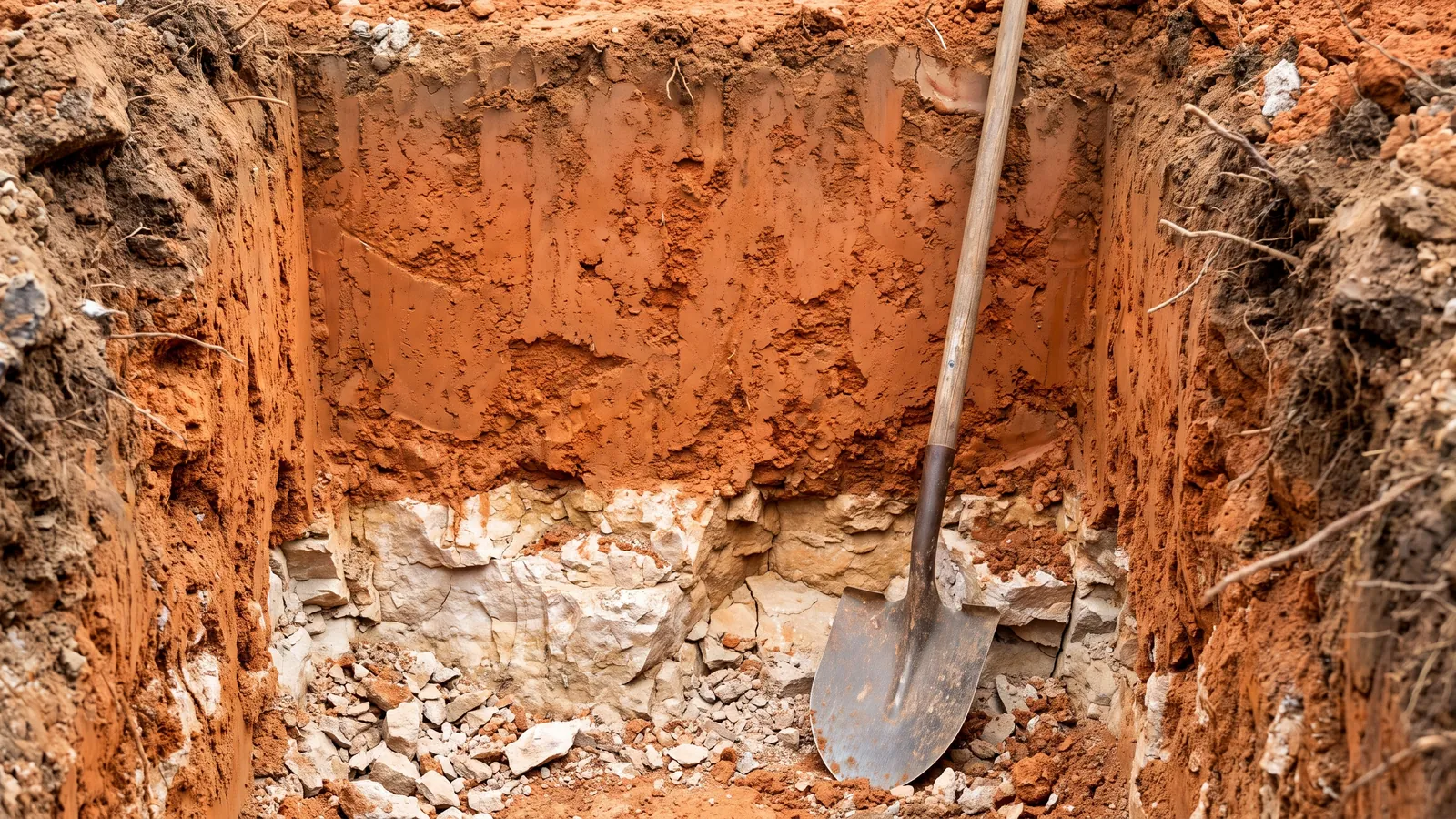
Harvest is the part of Madison County that turned from hayfields into rooftops fastest, and the red Dewey clay under those rooftops swells in a wet April and shrinks hard by September. The newer the slab, the more of that cycle it has yet to see. Here is what the first ten years on Harvest clay look like, in the order they tend to show up.
- Years one to three: the first dry summer. The clay around the slab edge shrinks away from the footing, a gap opens between the slab and the soil, and a hairline shows in the brick at a corner. Usually harmless. Keep the beds watered evenly through August, extend the downspouts, and note the date.
- Years three to seven: the edge drops. The fill placed to level the pad consolidates on one side, often the downhill side of a lot that was a slope before the grader arrived. Doors rub, a stair-step crack climbs the mortar, the driveway apron separates from the house slab. This is the year to call, because an inch is cheaper to lift than two.
- Years seven to twelve: it settles or it does not. Most slabs finish moving and the cracks stay the width they are. Some do not, usually because a downspout, a swale that was never cut or a leaking irrigation line keeps one edge wet. Those get piers.
- Crawl space homes of any age. On the older lots along Jeff Road and Capshaw Road, the raised-floor houses take on the moisture that fifty-five inches of rain a year leaves in the dirt, and the joists under the bathrooms rot before anything else.
The inspection is where a Harvest house gets placed in that list. A laser survey puts numbers on the floor, the brick cracks are gauged at the top and the bottom, and the yard is walked for the water: Harvest lots are often bigger than Madison's but they are also often sloped, and the house sits on a cut-and-fill pad that drains to the neighbor below or receives from the neighbor above. The report says which stage the slab is in, whether it is still moving, and what to do, which on a good many Harvest visits is to extend four downspouts, regrade a bed and look again in a year.
Where piers are the answer, they go in along the dropped edge, driven to the limestone that lies under the clay across this part of the county, and the edge is lifted against the survey. Harvest is unincorporated Madison County, so permits for structural work are the county's rather than any city's, and the crew files them; Alabama 811 is called two business days before the excavation. Pier jobs here usually cross the $10,000 threshold for Alabama's residential home builder's licence, so the contractor's HBLB number is on the sheet before you sign.
One Harvest-specific note: a fair number of lots are still on wells and septic. A septic field kept wet year-round softens the clay on that side of the house, and a drain field cannot be trenched through for a French drain. The inspection maps where the tank and field are before any drainage is drawn, and the sheet routes the water around them.
How a Harvest job runs
The stage, written down
The inspection places your slab in its first decade: still shrinking at the edge, actively dropping, or finished; the report says which and why.
County permits
Harvest is unincorporated, so structural underpinning is permitted through Madison County's building office; the crew files it.
Piers to the limestone
Push or helical piers driven through the Dewey clay to rock, brackets under the footing, a lift measured against the laser survey.
Downspouts before pipe
Extensions and regrading priced first on every Harvest sheet; a French drain only where the slope still brings water to the wall.
Septic and wells mapped
The tank, the field and the well line are located before any trench is drawn, so drainage goes around them.
Crawl spaces on the older roads
Piers, sistered joists and vapor barrier for the raised-floor homes along Jeff Road and Capshaw Road.
Streets, subdivisions and landmarks we reach
- Subdivisions along Jeff Road and Capshaw Road
- Neighborhoods off Harvest Road toward Wall Triana
- Newer streets north of Capshaw near the Limestone County line
- The older lots around Harvest Elementary
- Lots on the slopes toward Monrovia
What we repair in Harvest
- Settled foundations put back on bearing with piers under slabs or new piers in the crawl space, and leveling to a measured target
- Cracks gauged and sealed with the right resin, bowing walls held with straps or anchors
- Basement waterproofing, sump pumps with battery backup, French drains and downspout work
- Crawl space encapsulation, free inspections before a purchase or after a storm, and commercial slabs
What Harvest owners ask first
Is red clay bad for a foundation?
It is demanding rather than bad. Dewey clay holds water and swells, then dries and shrinks, and a slab rides that cycle every year. Houses on it do fine when the water around them is managed and the slab was poured on compacted fill. The inspection tells you how yours is doing.
Who issues the permit in Harvest?
Madison County, because Harvest is not an incorporated city. Underpinning and structural lifting go through the county building office; the crew files the permit and the fee is on the sheet.
Can you put a French drain across my septic field?
No, and we will not. Trenching a drain field breaks it. The inspection locates the tank and field first and routes any drainage around them; often downspout extensions and regrading do the job without a trench at all.
My slab is three years old and has a crack. Should I worry?
Probably not yet. A hairline at a corner after the first dry summer is the clay shrinking from the edge. Extend the downspouts, water the beds evenly in August, date a photo, and have us look free. If the crack is wider at the top or the door has started to rub, call sooner.
What does a typical Harvest pier job cost?
Four to eight piers along a dropped edge, $1,300 to $2,500 each installed, so most jobs land between $6,000 and $18,000 with the drainage included. The sheet itemizes it after the inspection, and it holds for thirty days.
Also close by: Madison · Hazel Green · Athens · every town we cover